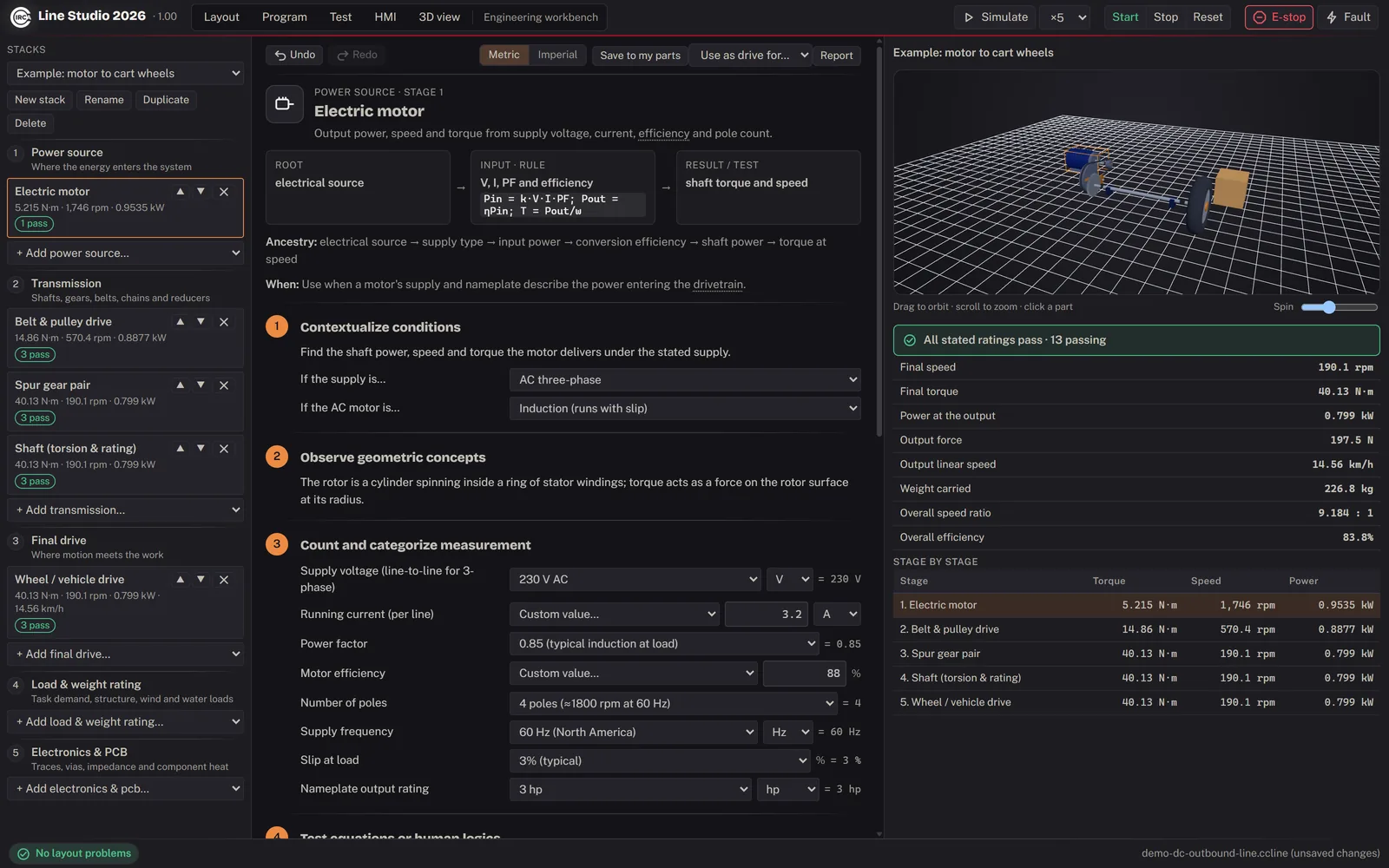
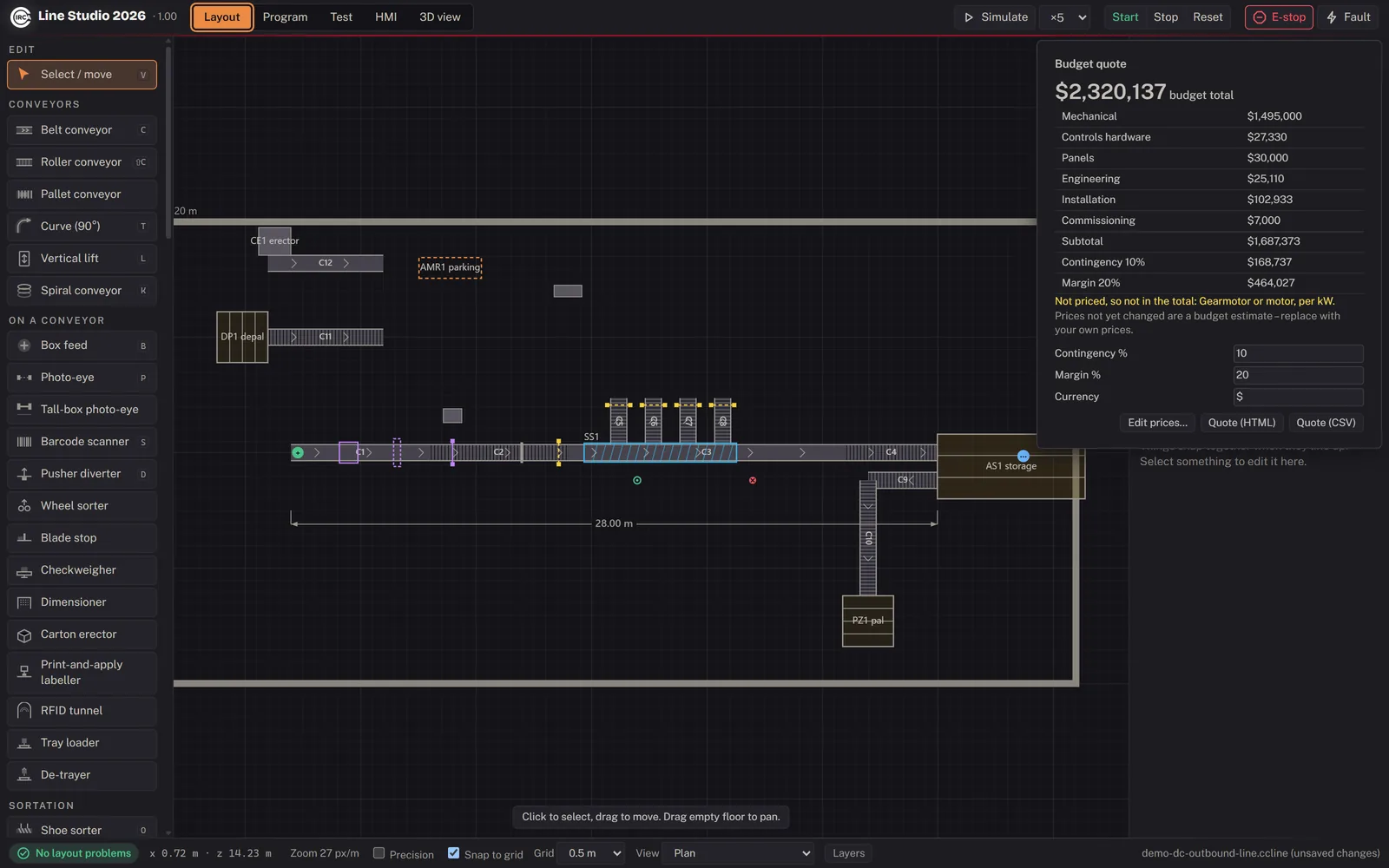
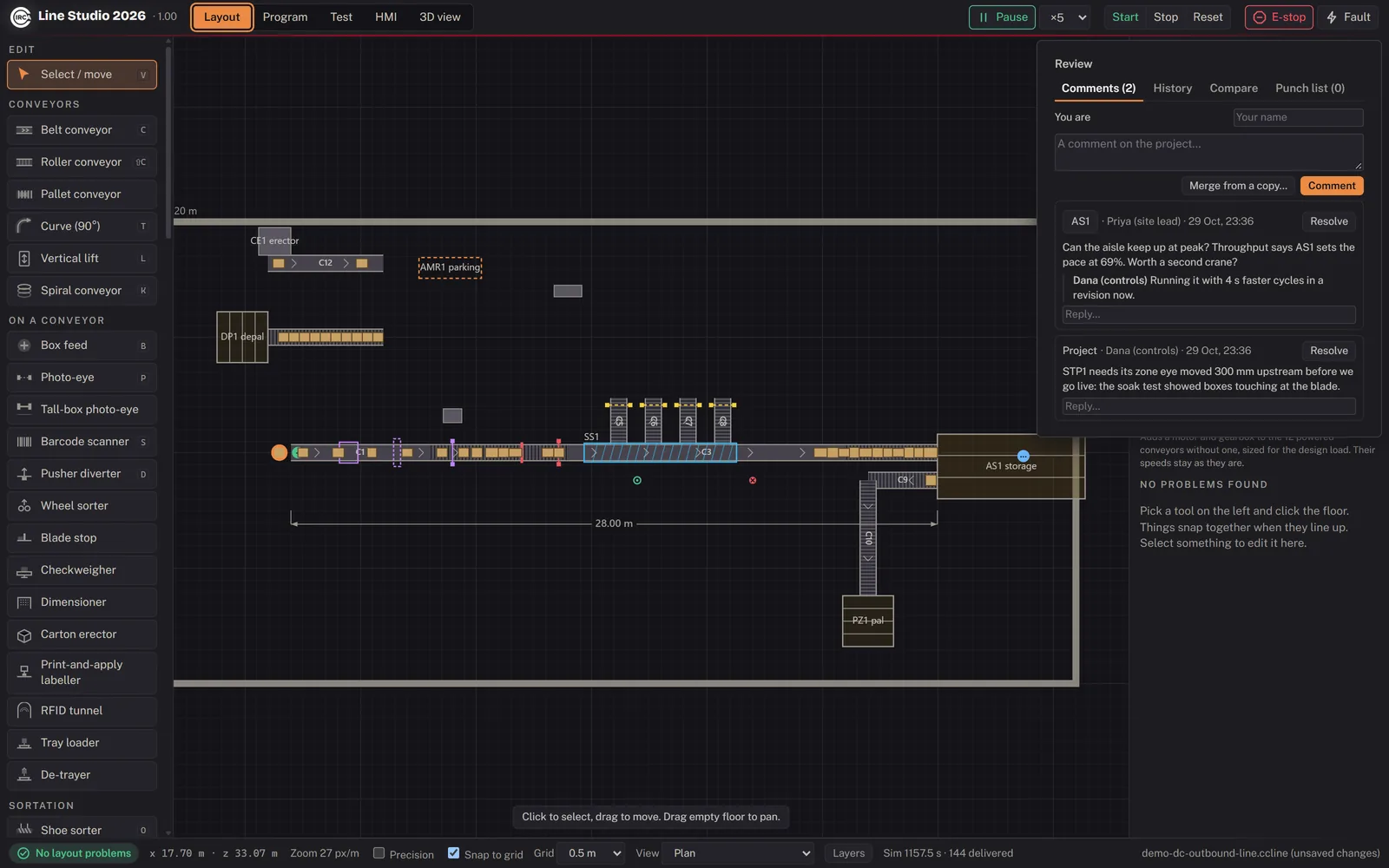
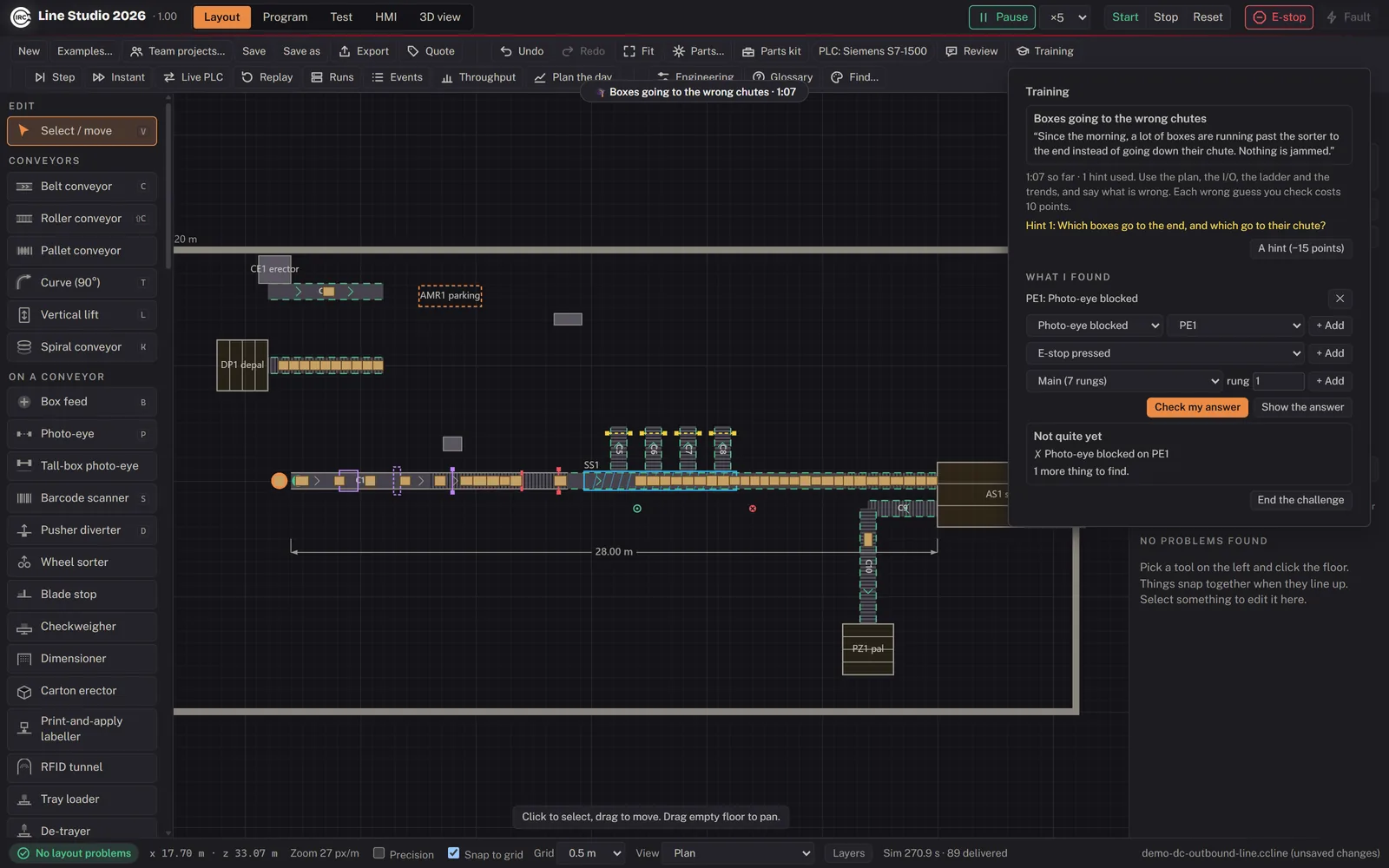
- Curves and inclines
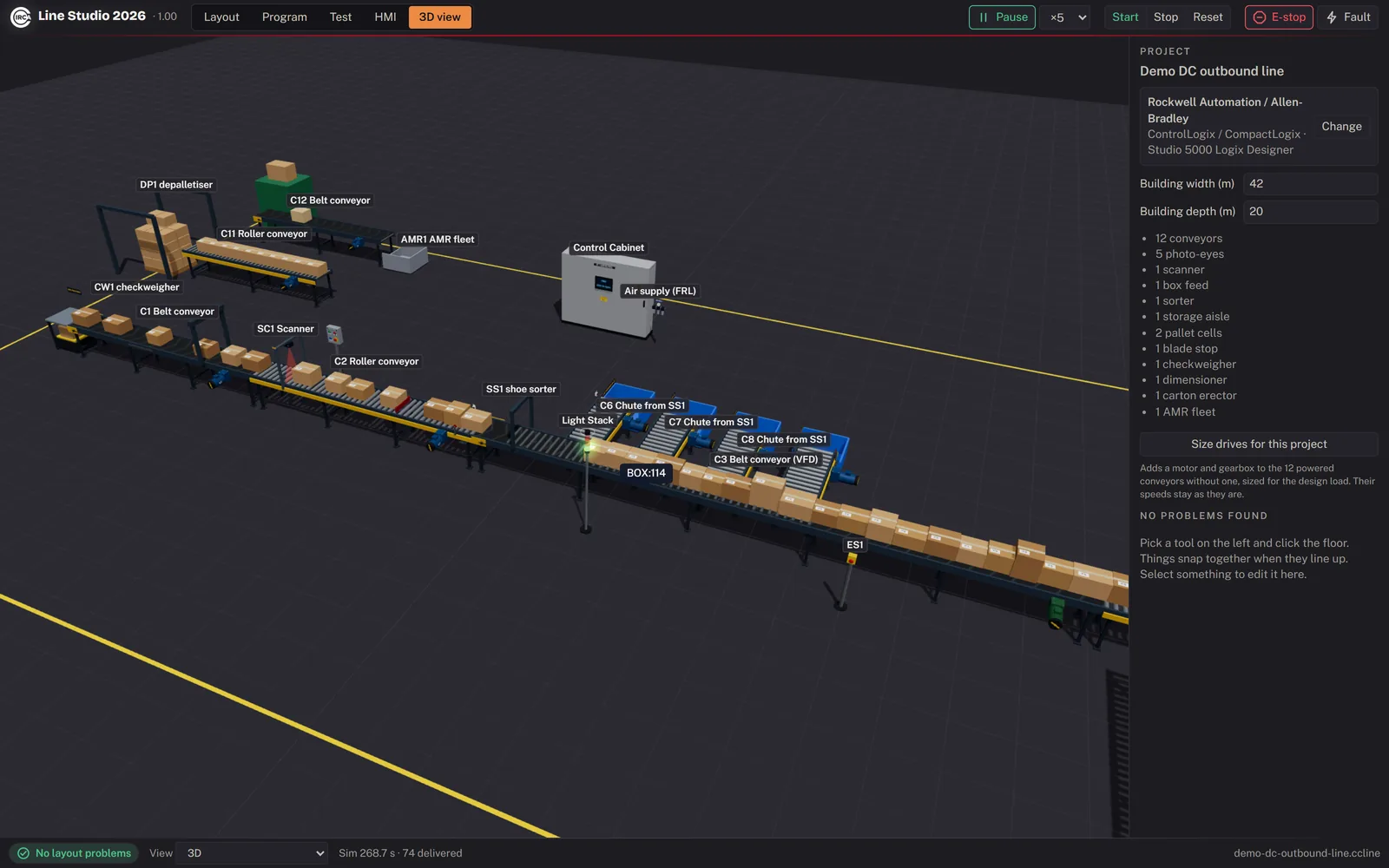
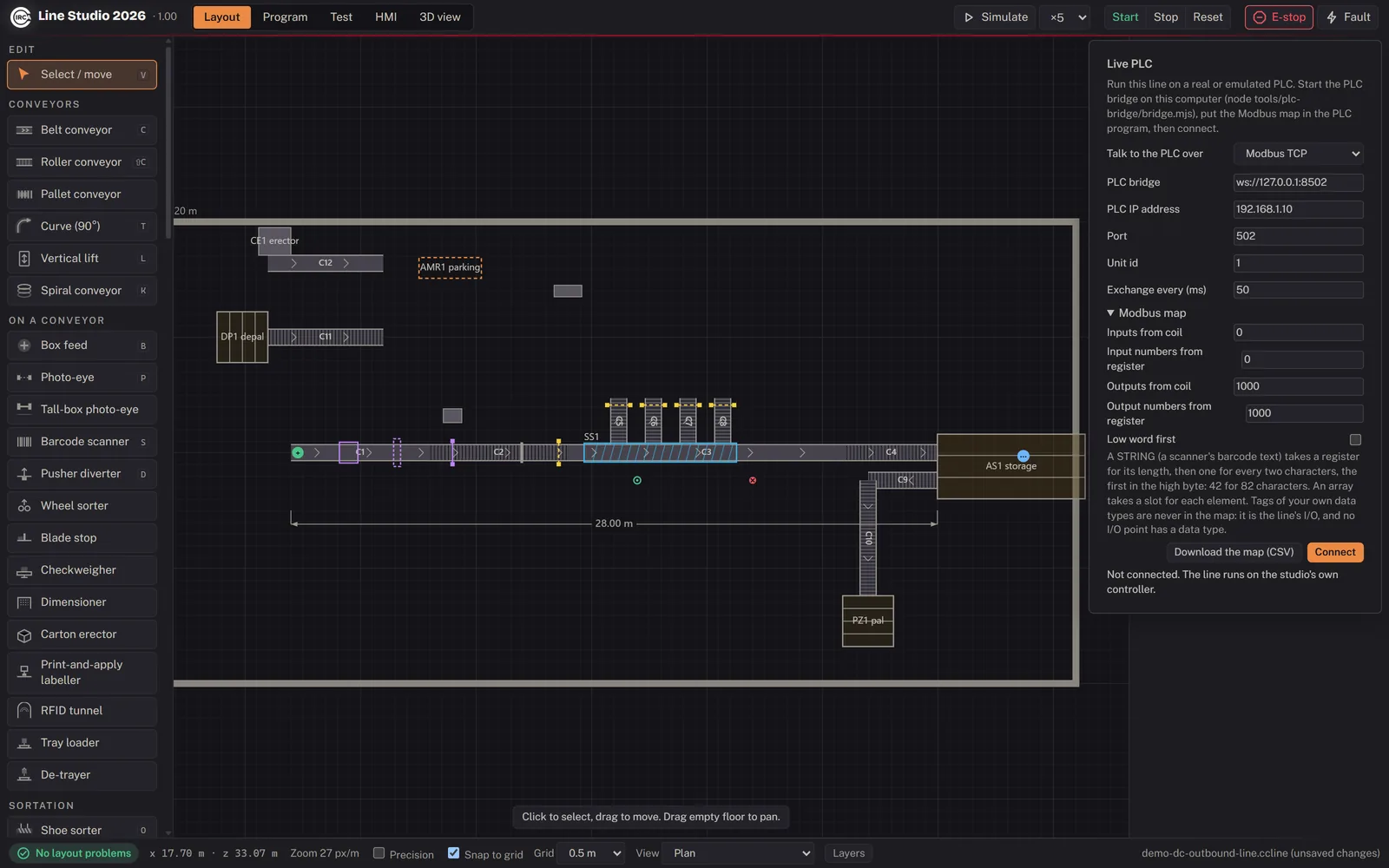
- 90° and 180° curve modules, belt or tapered roller, any radius; belt inclines and declines up to a mezzanine, with a warning past 20°.
- Zero-pressure accumulation
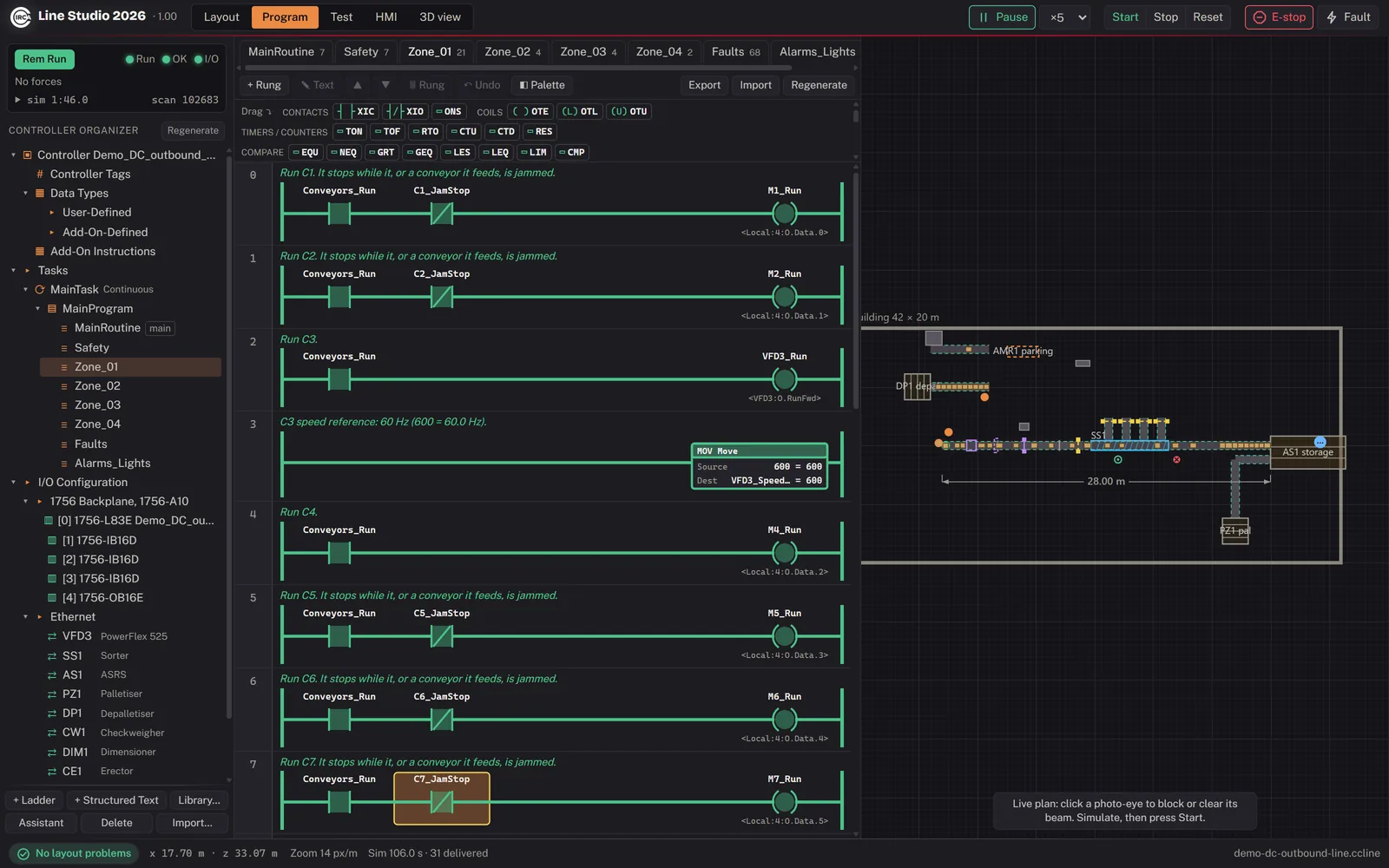
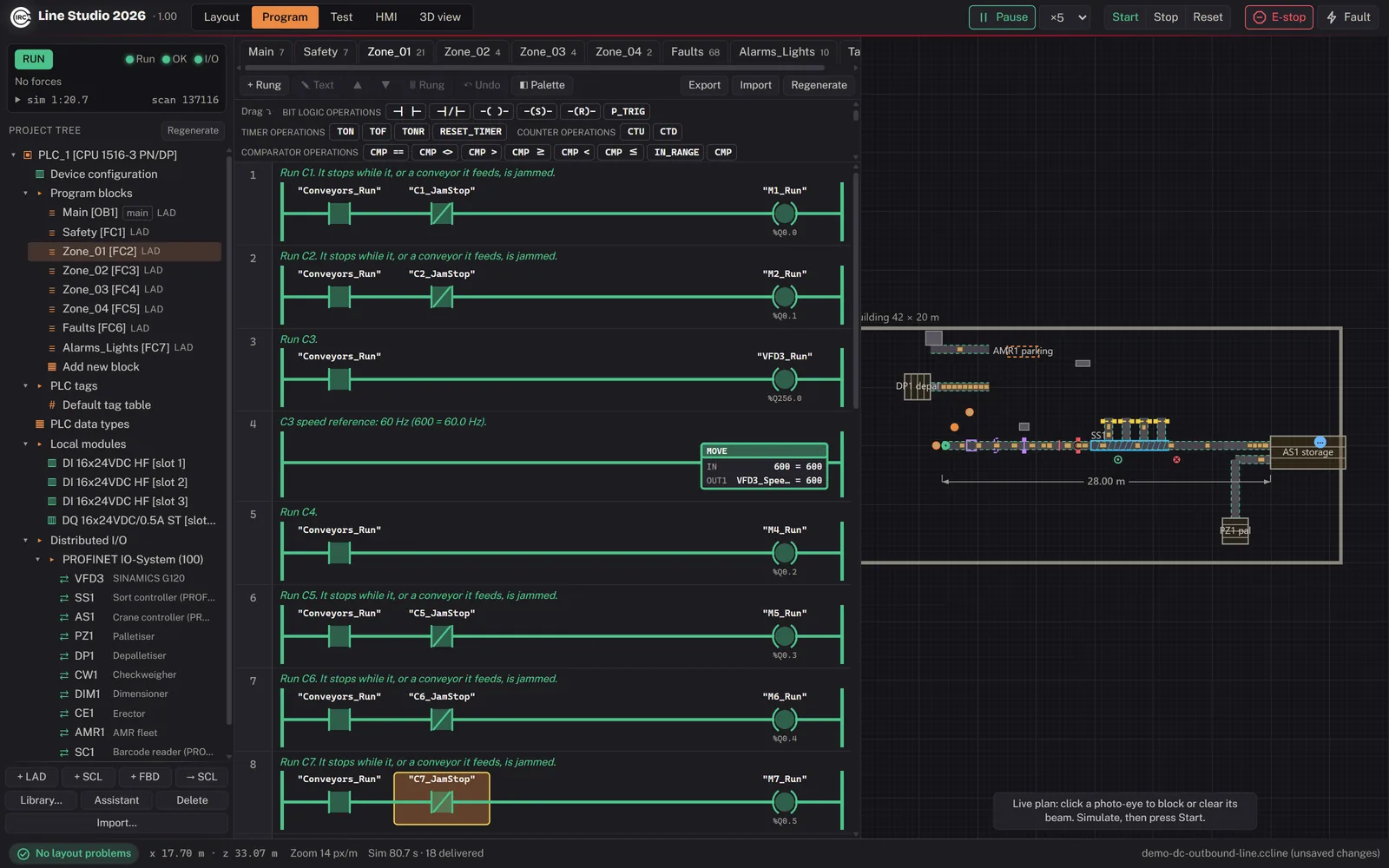
- Split a conveyor into motor-driven zones in one click. Backed-up boxes wait apart, and the program to do it is written for you.
- Sorting written for you
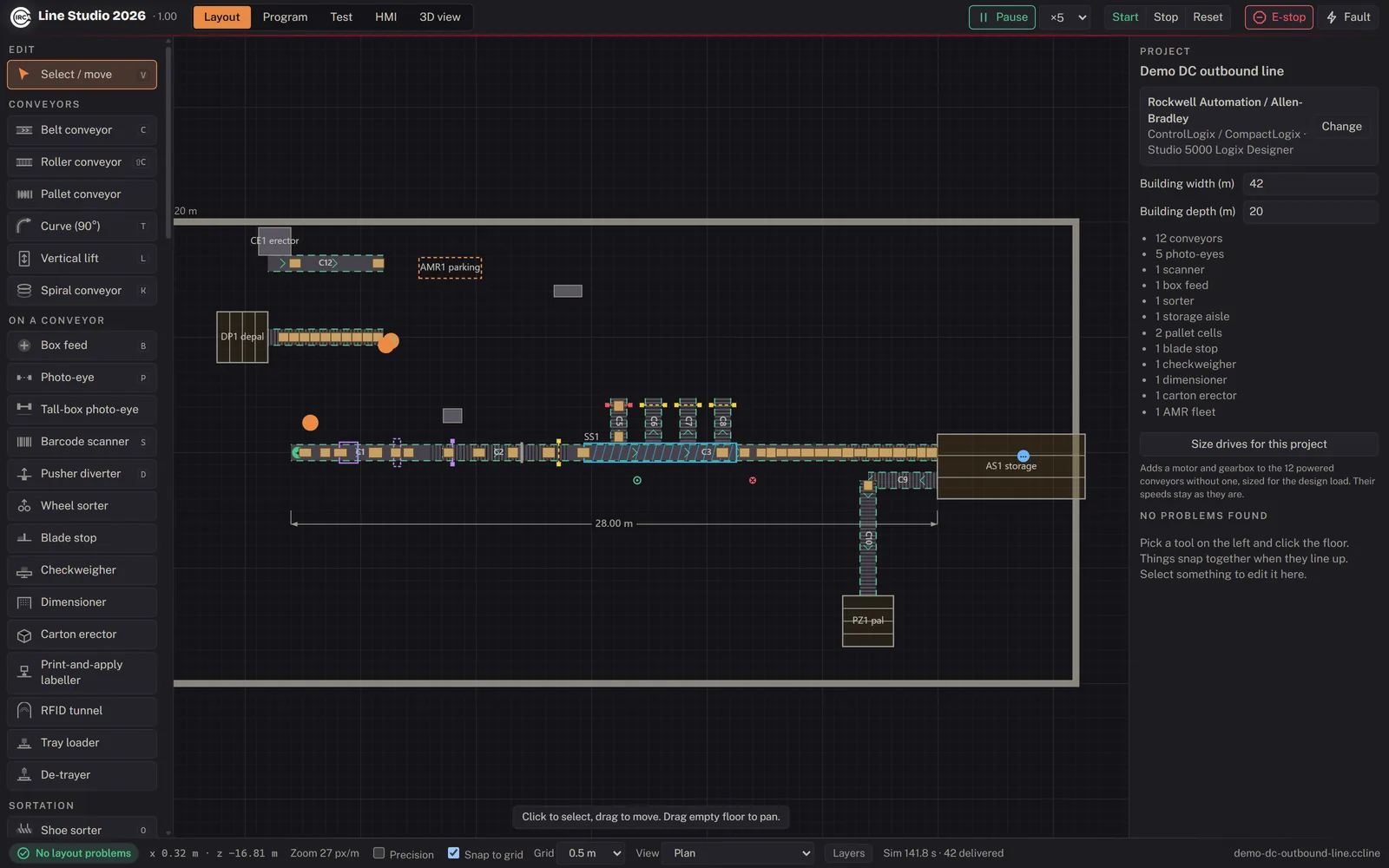
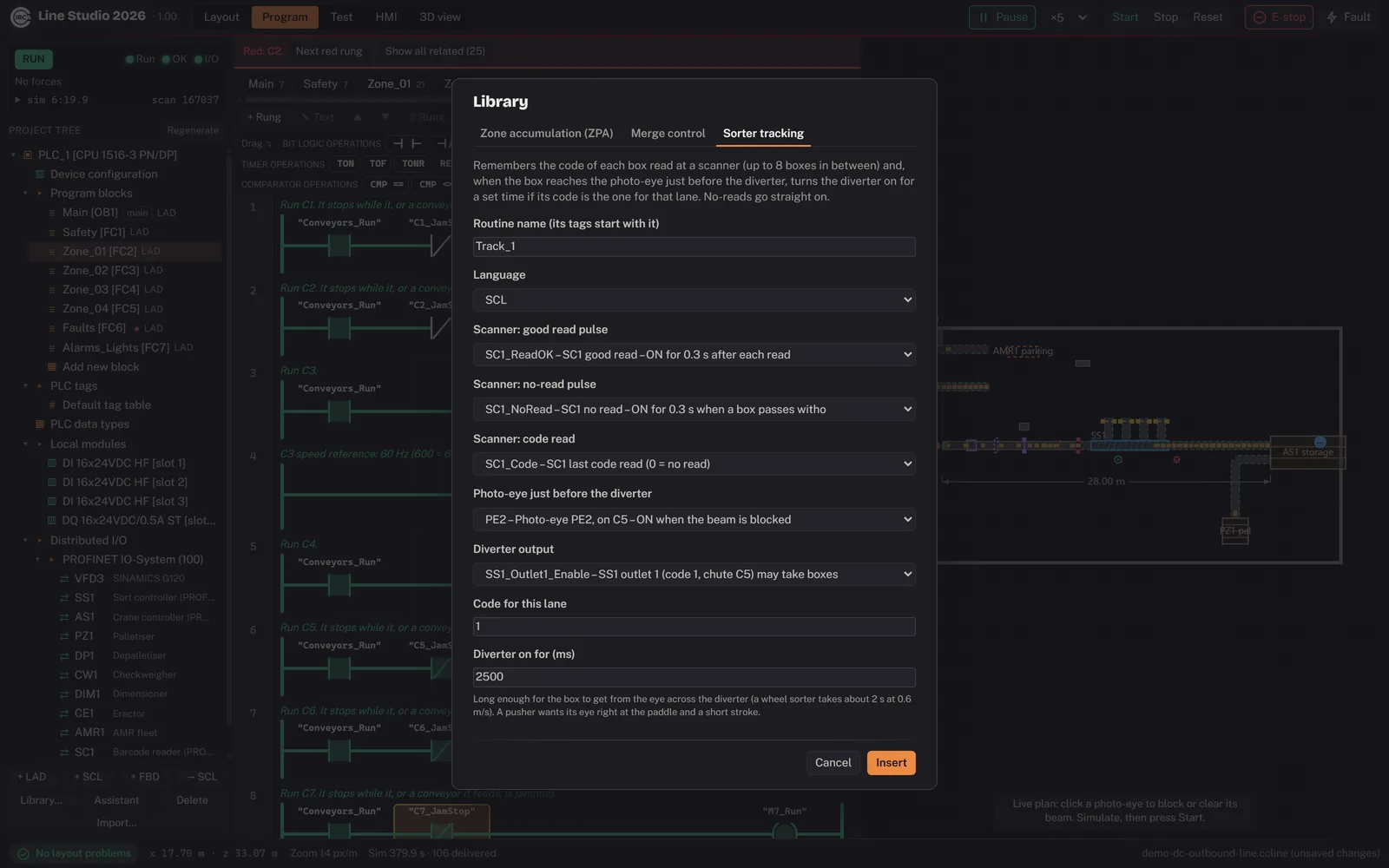
- Scanner to diverter tracking for every lane, chained down the line, with pushers timed to meet the box square on.
- Control panels and remote I/O
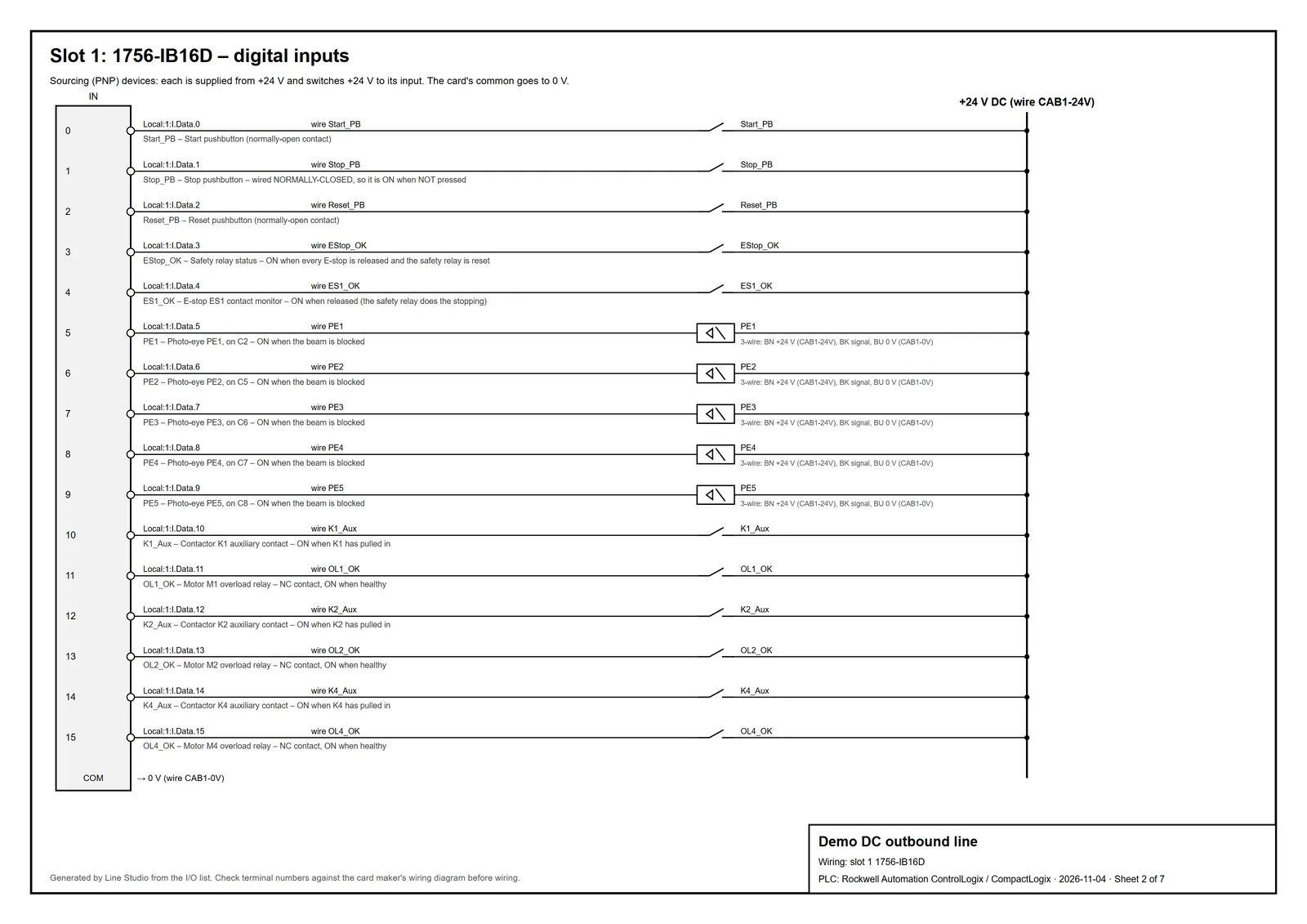
- Put a cabinet in each area. Every conveyor is wired to the nearest or the one you pick, the I/O cards follow, and long cable runs are flagged.
- A written functional description
- Scope, material flow, control philosophy, every zone’s sequence of operation, alarms, panels and the I/O list, ready to print.
- Capacity in seconds
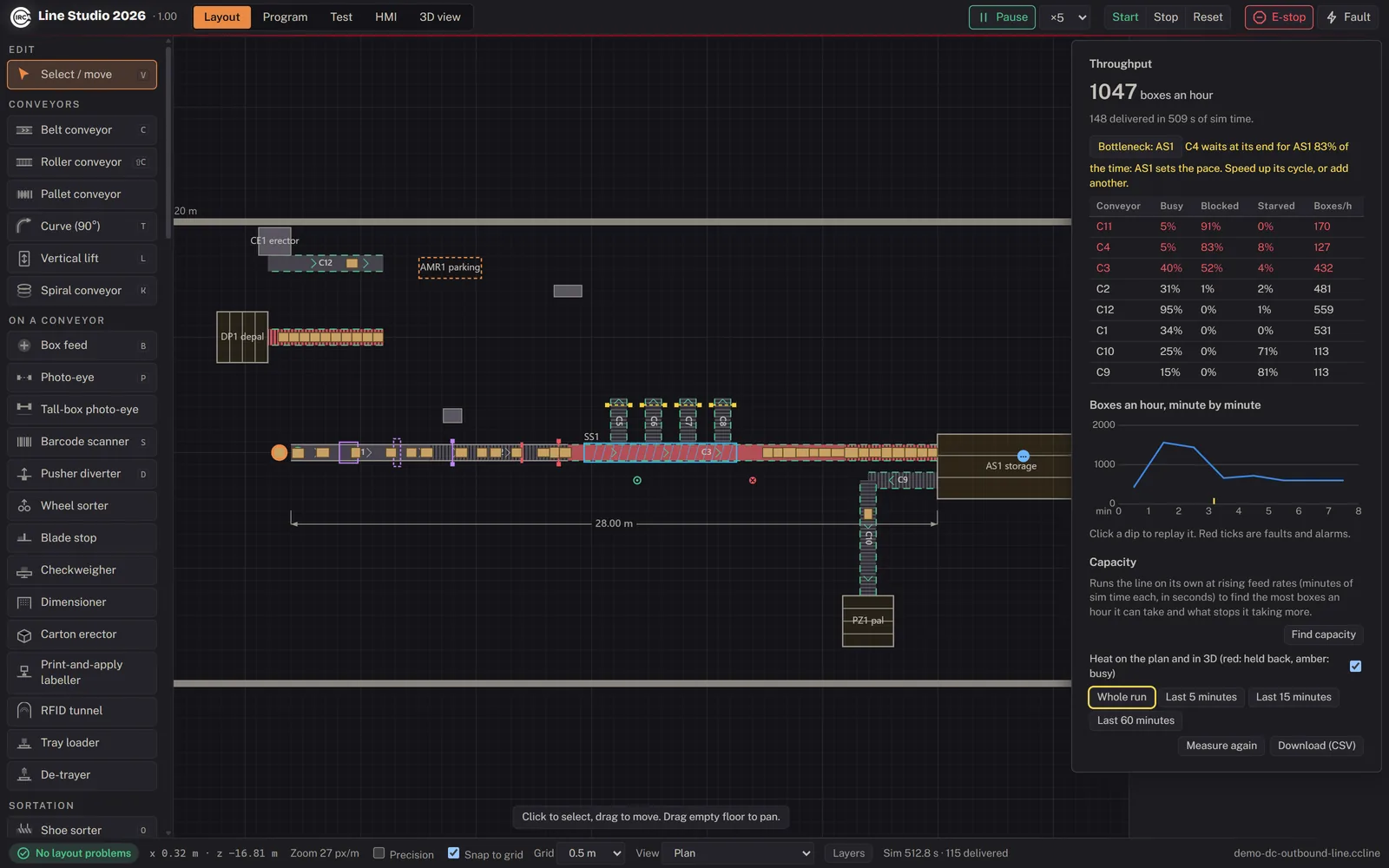
- Runs the line at rising rates on its own and tells you the most boxes an hour it takes, and what stops it taking more.
- Liquids, air and process
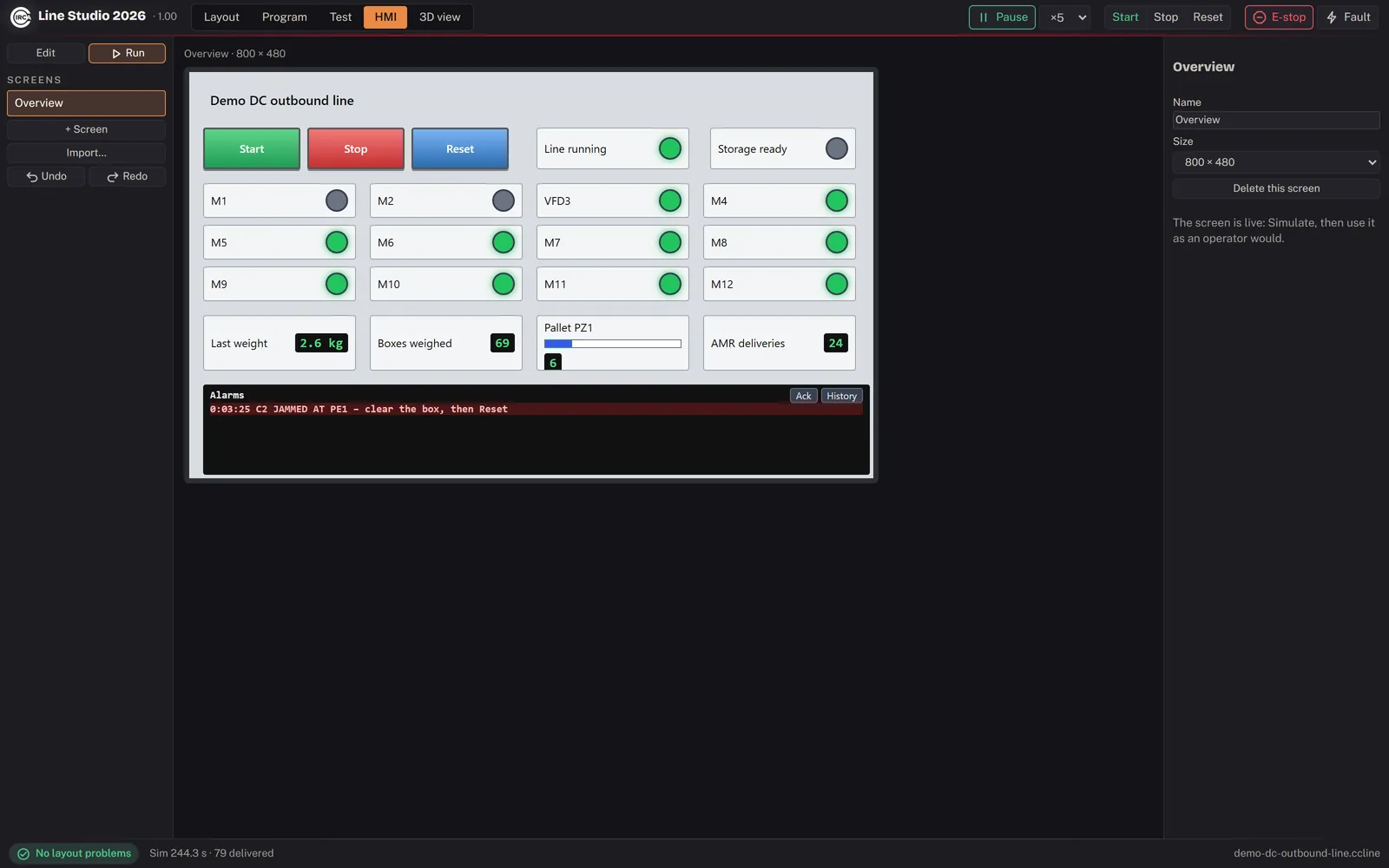
- Tanks, valves and flow, heating and air with a building clock, and PID faceplates on the HMI, for lines that are more than conveyors.
- Bring your existing program
- Import Studio 5000 .L5X, TIA Portal SCL and Openness XML, PLCopen XML and tag tables. A report lists what came in, what changed and anything left out.
- Your building from CAD
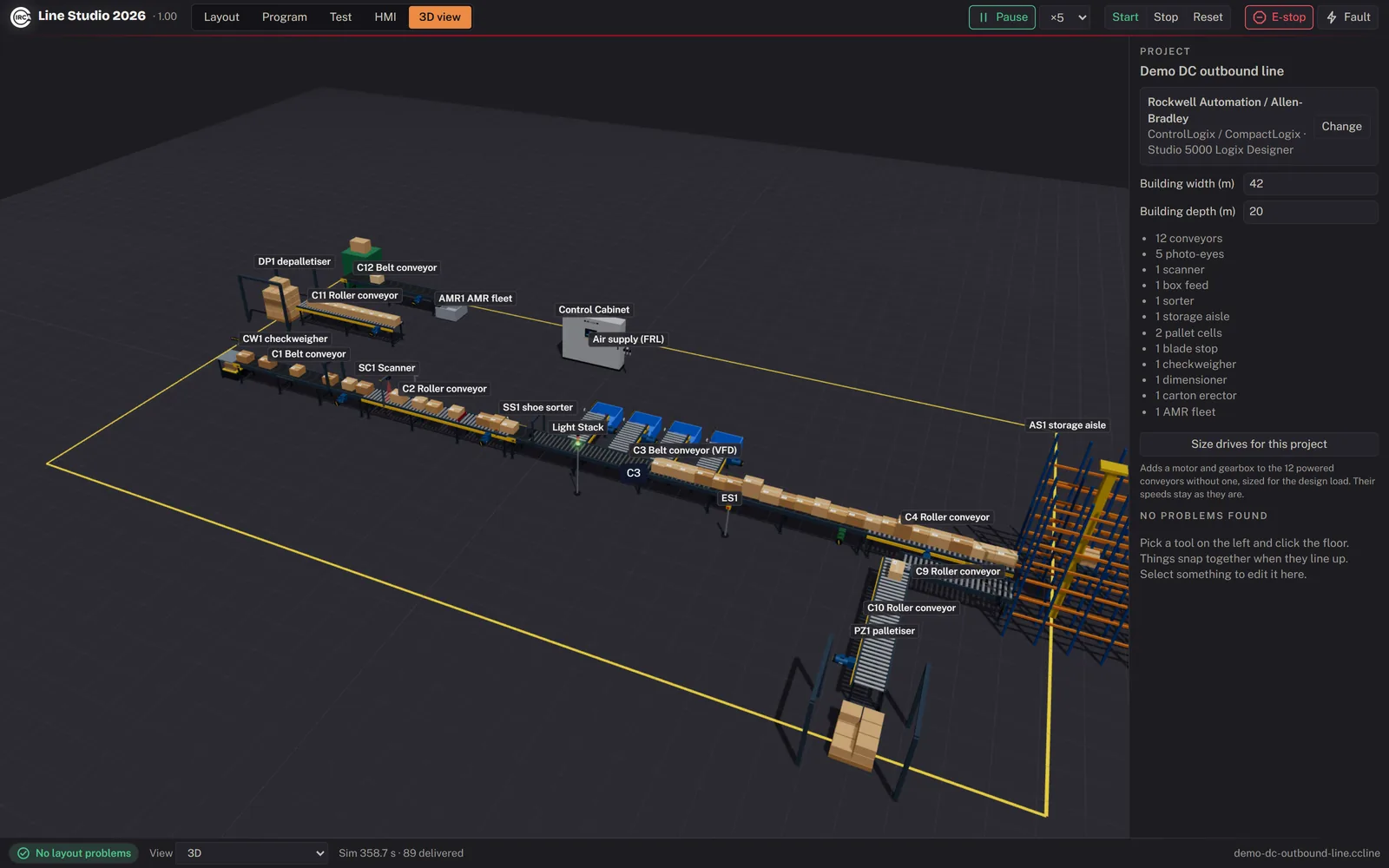
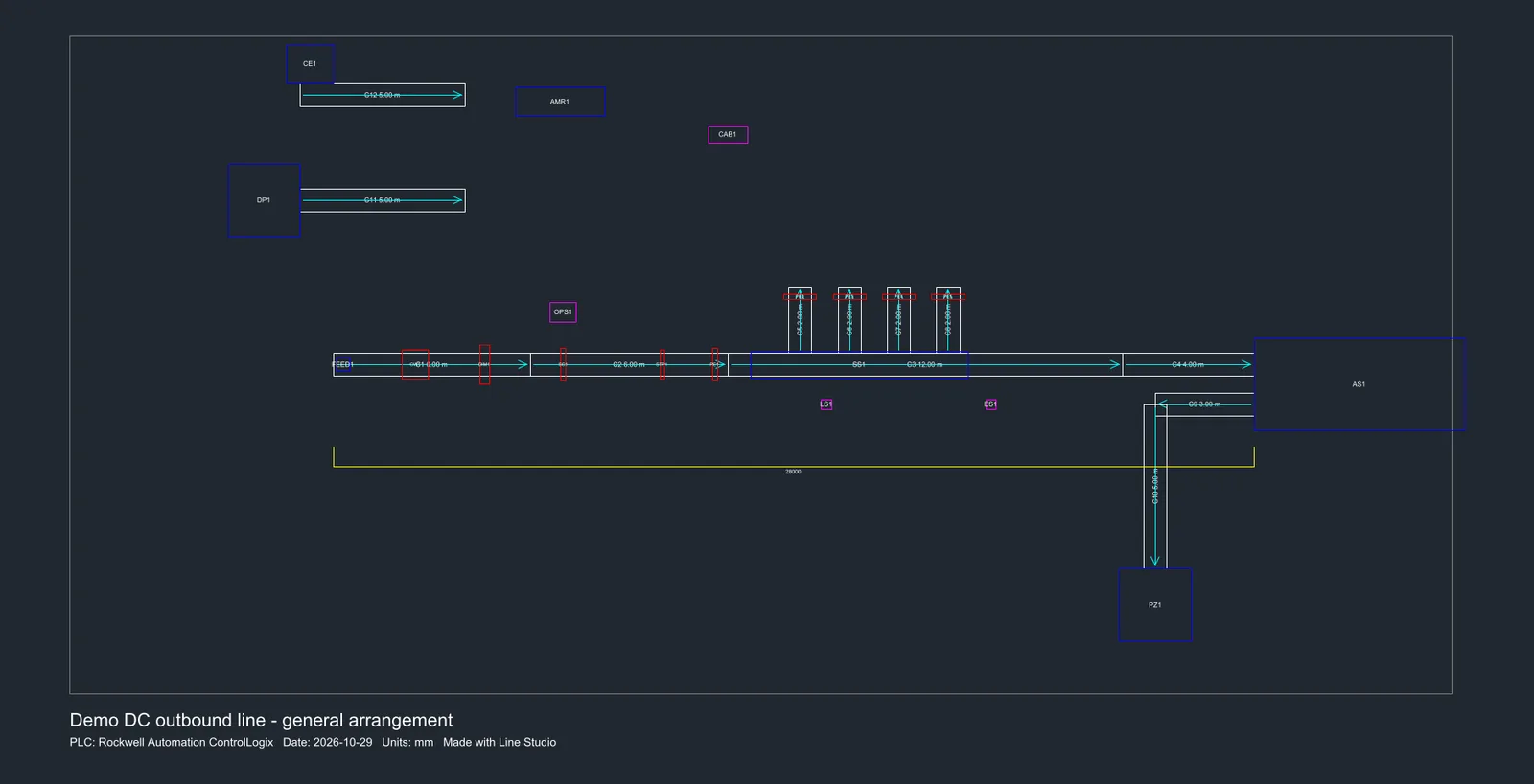
- Bring the floor plan in as a DXF and design over the real walls, columns and doors.
- Shared team projects
- Companies with two or more seats keep projects on their account, so everyone opens the same one. Every save is a revision, and a clash is never silently overwritten.
- A logic assistant
- Ask it to explain a routine or a rung, or to write rungs in your PLC maker’s style. It is checked against your tags before anything goes in. For paid seats, with a daily limit.
- Ready-made examples
- Sixteen, from a cold-store distribution centre and a robotic fulfilment centre to a parcel sortation loop, palletising, PID and motion: open one, run it, make it yours.